
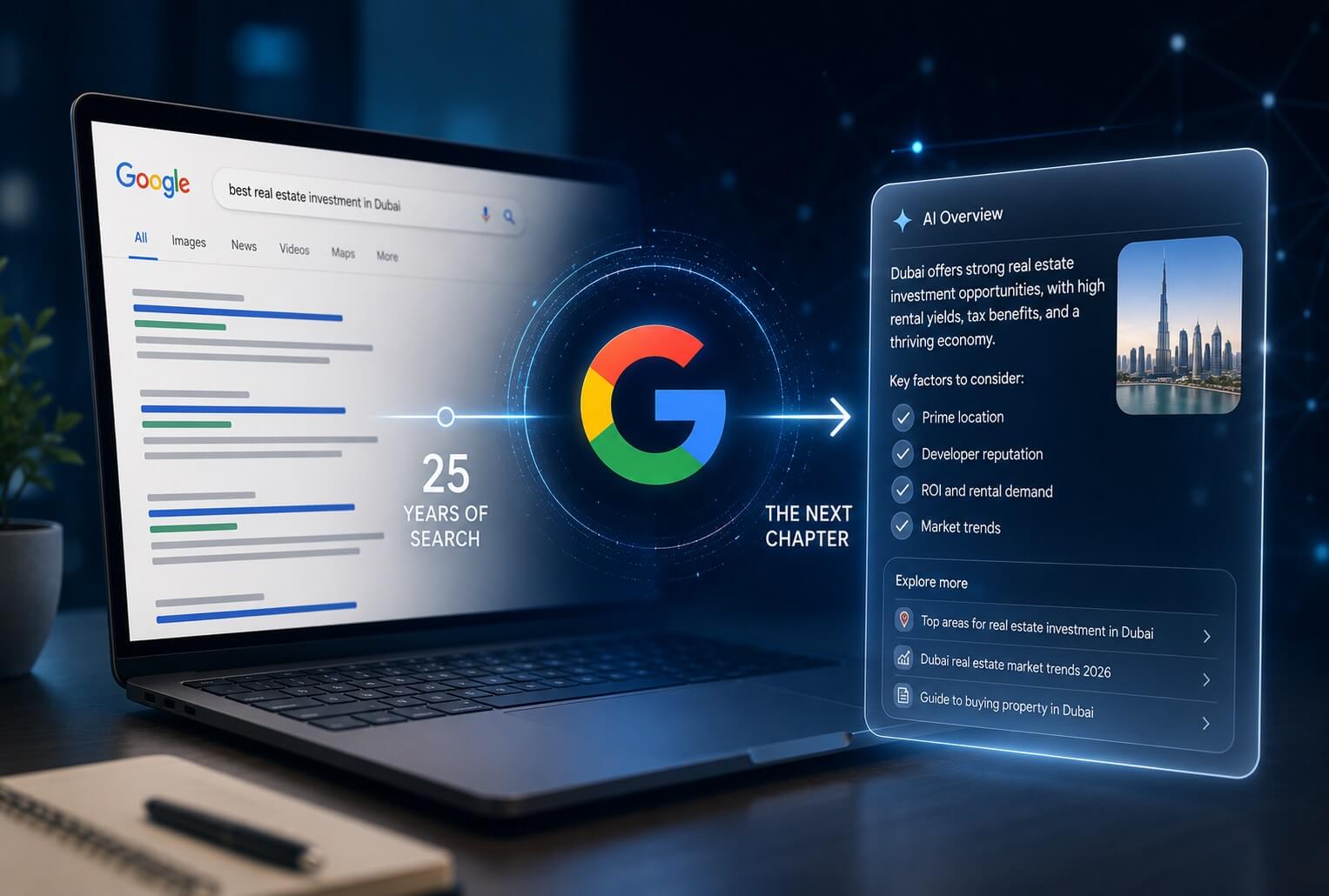
Google’s Biggest Search Change in 25 Years: What Happens Next?
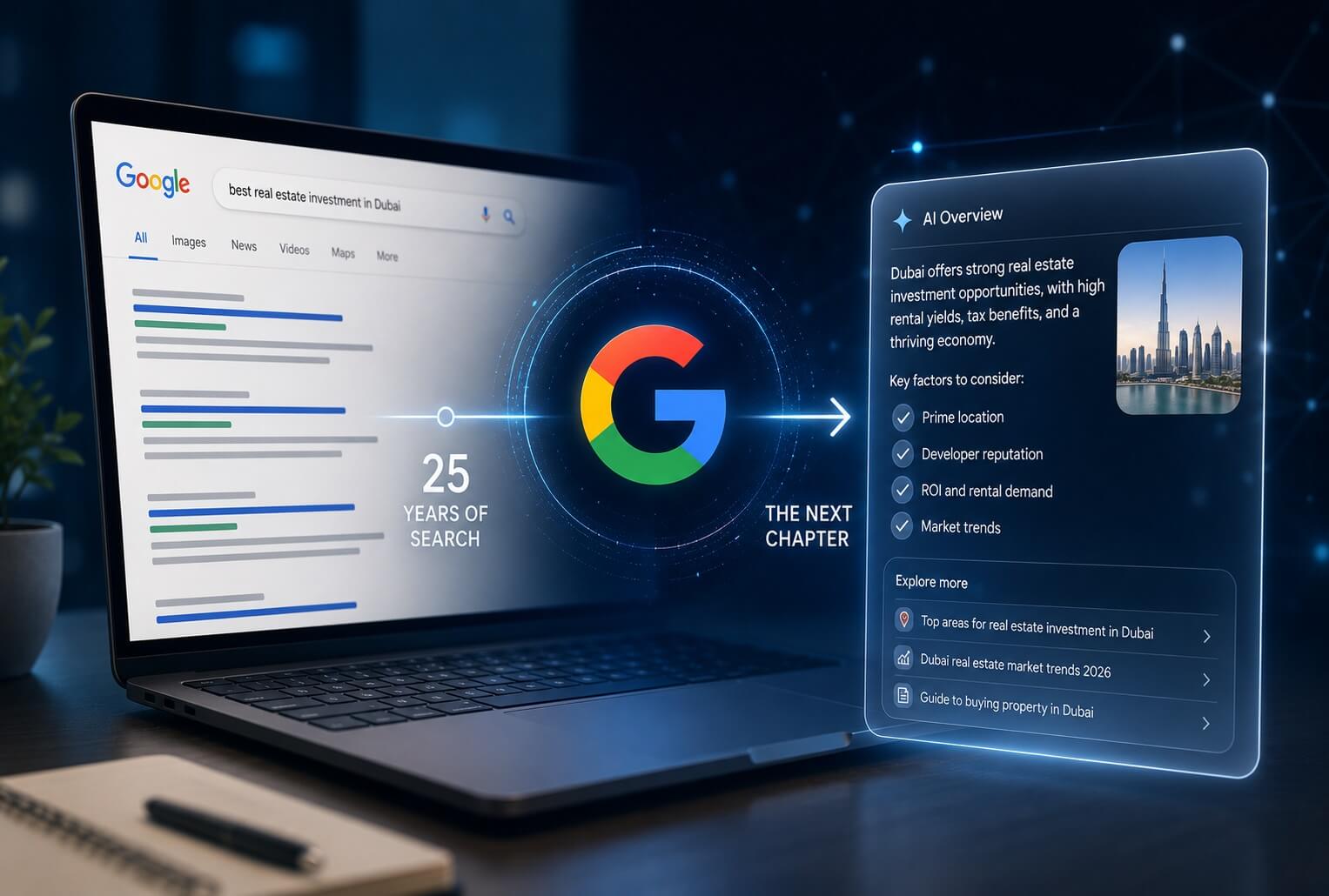
For most of the internet era, Google Search has been built around a familiar model: users type a query, receive a list of links, and choose which websites to visit. That model is now evolving. The rise of Google AI, conversational answers, AI-generated summaries, and AI-Powered Search experiences represents what many analysts consider Google's biggest search change in 25 years.
The shift does not mean traditional Search Engine Optimization (SEO) is disappearing. Instead, it signals a transition from link-first search toward answer-first discovery. Businesses that rely on organic traffic, Content Marketing, and digital visibility need to understand how AI Search changes user behavior, Search Rankings, and long-term Search Visibility.
This article explains what is changing, why it matters, and what businesses should do next.
Google's Biggest Search Change in 25 Years Explained
The defining change is not a single algorithm update. It is the integration of generative AI directly into the search experience.
Historically, search engines primarily ranked and displayed links. AI-powered systems can now analyze multiple sources, generate summaries, answer questions conversationally, and provide follow-up recommendations without requiring users to click through several pages.
As part of this AI search revolution, Google is increasingly combining traditional indexing with AI-generated responses. Users may receive a synthesized answer before seeing or clicking organic listings. This changes how information is discovered and consumed.
For website owners, the key question is no longer only “How do I rank #1?” but also “How do I become a source that AI systems reference when generating answers?”
How AI is Changing Google Search
Understanding how AI is changing Google Search helps explain why existing SEO playbooks are evolving.
AI-powered search systems can:
Interpret conversational queries and follow-up questions.
Understand context rather than relying solely on exact keyword matches.
Synthesize information from multiple sources into a single response.
Personalize answers based on location, intent, and prior interactions.
Reduce the number of clicks required to answer straightforward informational queries.
This shift aligns with broader Google AI search trends and the growing expectation that search should behave more like a knowledgeable assistant than a directory of webpages.
What Google's AI Search Means for SEO
A major concern among marketers is what Google's AI search means for SEO.
The short answer: SEO is not disappearing, but its emphasis is changing.
Keyword targeting
Backlinks and authority
Technical optimization
Organic rankings
Click-through traffic
Context-rich content
Topical authority
Clear factual answers
Structured information
Trustworthiness and expertise
Likelihood of being referenced in AI-generated responses
Many SEO fundamentals remain valuable. Fast websites, crawlable architecture, clear information hierarchy, and high-quality content still matter. However, success increasingly depends on becoming a credible source rather than merely optimizing pages for individual keywords.
The Impact of AI Search on Digital Marketing
The rise of AI Search is transforming the way businesses approach Digital Marketing and online visibility. Traditionally, users relied on search engines to browse through multiple websites and compare information before making decisions.
Today, AI-Powered Search technologies can generate direct answers, summarize information, and provide personalized recommendations within seconds. As a result, businesses must adapt their marketing strategies to ensure their content remains visible and relevant in this evolving search environment.
One of the most significant changes is the growing importance of high-quality, authoritative content. Instead of focusing solely on keyword rankings, businesses now need to create comprehensive resources that answer user questions clearly and accurately. This shift is influencing Content Marketing, SEO strategies, and overall Search Visibility. Companies that consistently publish valuable and trustworthy information are more likely to be recognized and referenced by AI-powered search systems.
The impact of AI search also extends to customer behavior and lead generation. Users increasingly expect fast, conversational, and personalized search experiences, which means businesses must optimize their websites and content for both traditional search engines and AI-driven platforms.
As the future of digital marketing continues to evolve, organizations that embrace AI-focused strategies, improve user experience, and build topical authority will be better positioned to maintain strong Search Rankings and remain competitive in the digital landscape.
Google AI Search Ranking Factors
Google does not publish a definitive list of Google AI search ranking factors, but several signals appear increasingly important in AI-powered environments.
Topical authority: consistent, high-quality coverage of a subject area.
Content accuracy: factual, up-to-date information.
Expertise and trust: evidence that the content comes from knowledgeable sources.
Structured organization: clear headings, FAQs, tables, and logical sections.
User satisfaction: content that fully answers the query.
Technical accessibility: pages that are easy for systems to crawl and interpret.
These align closely with broader AI search ranking factors discussed across the industry.
How to Optimize Content for AI Search
Businesses asking how to optimize content for AI search should focus on clarity, depth, and authority rather than keyword stuffing.
Best Practices
Answer questions directly. Begin sections with concise answers before expanding.
Cover topics comprehensively. Address related subtopics, definitions, comparisons, and practical implications.
Use clear structure. Headings, lists, tables, and FAQs help both users and AI systems parse information.
Demonstrate expertise. Include practical insights, data, examples, and nuanced explanations.
Update content regularly. AI systems favor current, reliable information for rapidly changing topics.
Avoid thin or repetitive pages. Consolidate overlapping content and build stronger topic hubs.
These principles support both traditional SEO performance and emerging AI-driven discovery.
AI Search Optimization Strategies for Businesses
Effective AI search optimization strategies require a broader view of visibility.
Businesses should:
Build topic clusters around core expertise areas.
Publish original insights, research, and analysis.
Create FAQ sections that mirror real user questions.
Strengthen brand recognition across the web.
Ensure consistent business information across digital channels.
Improve page speed, mobile usability, and accessibility.
Track branded searches and citation visibility in addition to rankings.
In many industries, becoming a trusted source is more defensible than chasing individual keywords.
How Businesses Can Improve Search Visibility in 2026
As AI Search and search technologies continue to evolve, businesses must focus on creating high-quality, trustworthy, and user-focused content to improve their Search Visibility. Rather than relying solely on traditional SEO tactics, companies should prioritize answering user questions, demonstrating industry expertise, and publishing valuable content that addresses real customer needs.
A strong content strategy, combined with technical SEO, fast website performance, mobile-friendly design, and clear website structure, can help improve visibility across both traditional search engines and AI-powered search platforms. Businesses that consistently build authority, update their content, and focus on delivering genuine value to users will be better positioned to maintain strong search rankings and attract qualified traffic in 2026 and beyond.
How to Rank in AI-Powered Search Results
Many marketers now ask how to rank in AI-powered search results.
AI-generated visibility is not a simple leaderboard. Instead, AI systems select sources they consider relevant, trustworthy, and useful for answering the user's question.
To increase the likelihood of being surfaced:
Provide clear, factual answers early in the content.
Cover the topic in sufficient depth.
Use natural language that matches real user queries.
Build topical authority through consistent publishing.
Earn references, mentions, and citations from credible sources.
Maintain strong technical SEO fundamentals.
The objective is not merely ranking a page, but becoming a reliable source that AI systems can confidently reference.
Future of Google Search and SEO
The future of Google Search and SEO is likely to be hybrid rather than purely AI-driven or purely link-driven.
Expect several trends to continue:
More conversational search experiences.
Greater use of AI-generated summaries and overviews.
Increased importance of entity recognition and brand authority.
More personalized and contextual results.
Stronger emphasis on trustworthy, well-structured content.
These developments align with broader search marketing trends 2026, the future of search marketing, and the evolution toward next generation SEO.
At the same time, traditional search results are unlikely to disappear entirely. Users still need original sources, transactions, local businesses, products, reviews, and detailed research. Websites that provide unique value will continue to matter.
What Happens Next for Businesses and Website Owners
Businesses should not view AI search as a threat to visibility; they should treat it as a change in how visibility is earned.
The most resilient organizations will:
Invest in authoritative content rather than mass-producing thin pages.
Strengthen brand trust and reputation signals.
Optimize content for both human readers and AI interpretation.
Monitor AI-generated search experiences alongside traditional rankings.
Build multi-channel discovery through search, social, email, and direct brand traffic.
As the debate around ChatGPT vs Google Search and other AI platforms continues, the winning strategy is not platform loyalty; it is becoming the source that intelligent systems consistently choose to reference.
Conclusion
Google's biggest search change in 25 years is less about a single update and more about the transition to AI-Powered Search. The era of simply ranking pages is giving way to an era of earning visibility within AI-generated answers, summaries, and conversational experiences.
For businesses, the path forward is clear: strengthen expertise, create genuinely helpful content, improve technical quality, and build brand authority across the web. Those fundamentals support traditional Search Engine Optimization (SEO) while also positioning organizations for the next wave of AI Search discovery.
Ready for the Future of AI Search?
As Google continues to transform search through artificial intelligence, businesses must evolve their SEO strategies to remain visible, competitive, and discoverable. Success in the new search landscape requires a combination of technical SEO, high-quality content, topical authority, and AI Search Optimization. Partner with Blossom Web Studio to future-proof your digital presence, improve search visibility, and build a strategy designed for both traditional search engines and AI-powered search experiences.