Personal Branding vs Business Branding: Which to Focus On?
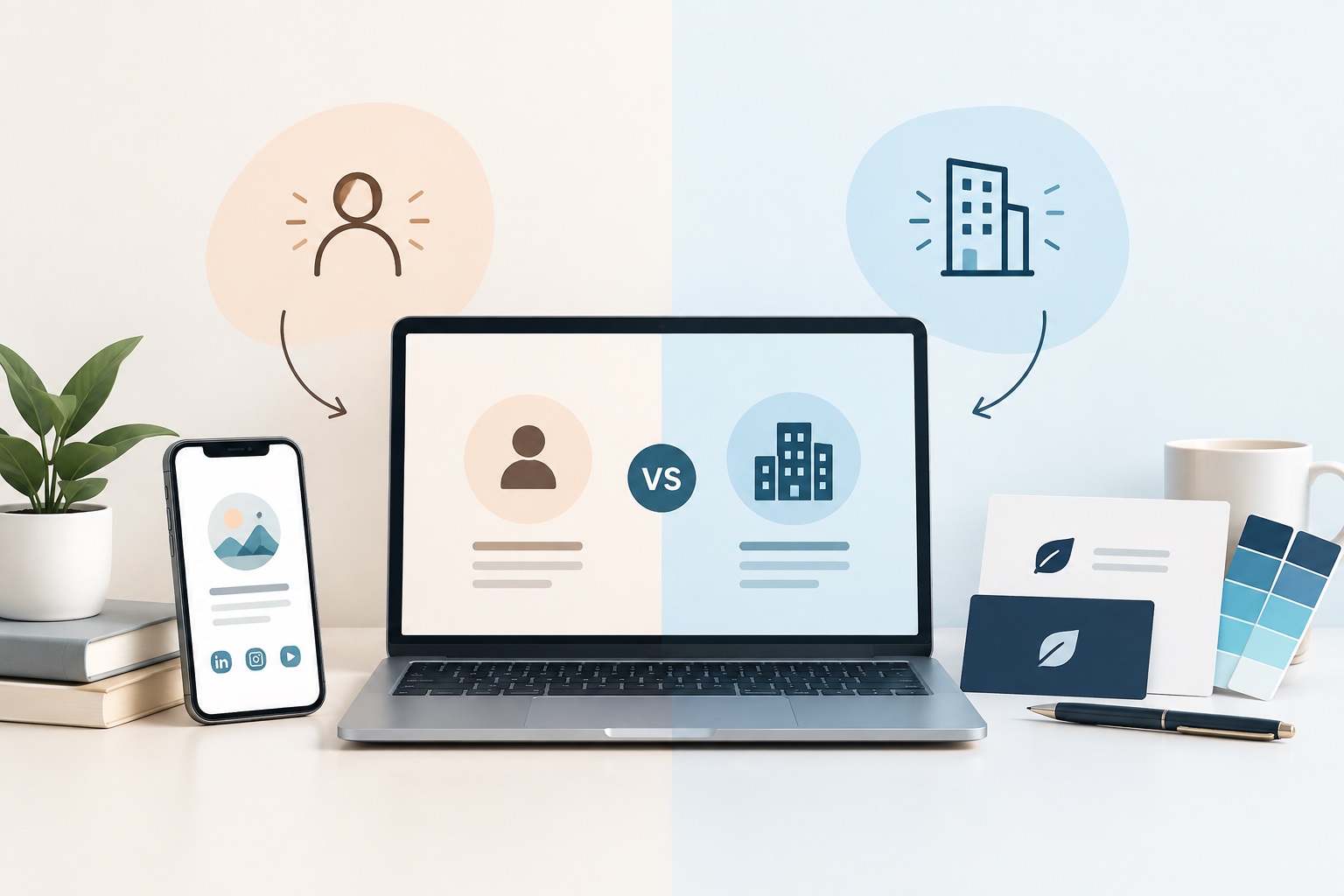
Building a strong brand is no longer limited to choosing a memorable logo or creating an attractive website. In a competitive digital marketplace, people want to know what a business stands for, who is behind it, what makes it different, and why they should trust it. This has sparked an important conversation around personal branding vs. business branding, and why both play a role in modern marketing.
But there is one question many entrepreneurs, professionals, founders, and small business owners face: Should you focus on personal branding or business branding?
The answer depends on your goals, industry, audience, and long-term plans. Personal branding can help establish your expertise and credibility, while business branding creates an identity that can grow independently of one individual. For many businesses, the most effective approach is not choosing one over the other, but finding the right balance between both.
What is Personal Branding?
Personal branding is the process of building a professional identity around an individual. Instead of promoting only a company name, you position yourself as the person people recognize for your knowledge, experience, skills, personality, or expertise.
Your personal brand can include your professional story, communication style, social media presence, website, content, opinions, achievements, expertise, and the way you interact with customers and industry professionals.
For example, a consultant may build a reputation around their own name and expertise, while a business coach may use educational content, speaking opportunities, videos, LinkedIn posts, and a personal website to establish authority.
Personal branding is particularly valuable when people are buying your knowledge, experience, advice, or creative ability.
It can help freelancers, consultants, coaches, creators, designers, speakers, entrepreneurs, executives, and other professionals stand out in crowded markets.
What is Business Branding?
Business branding focuses on creating a recognizable identity for a company rather than an individual.
It covers much more than a logo. A strong business brand can include the company name, logo, colors, typography, tone of voice, messaging, website, marketing materials, customer experience, packaging, social media presence, and overall visual identity.
The goal is to make the company recognizable and consistent across different platforms and customer touchpoints.
A professional business branding strategy helps answer important questions:
What does the company represent?
Who is the target customer?
What makes the business different?
What should customers feel when they interact with the brand?
What position should the company occupy in the market?
When these elements work together, branding becomes a valuable business asset rather than simply a visual design exercise.
Personal Branding vs. Business Branding: The Key Difference
The biggest difference is what the brand is built around.
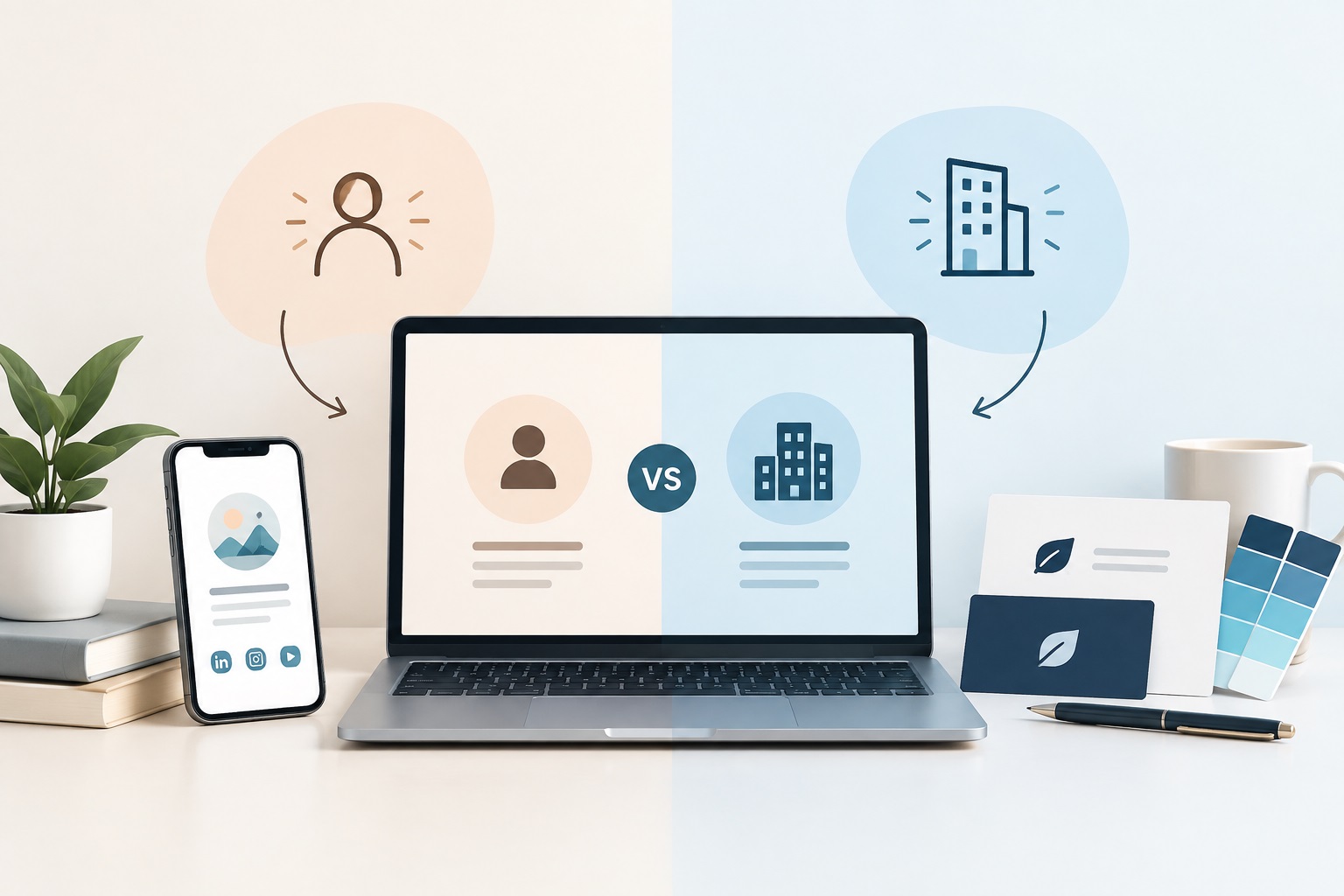
Personal branding is built around a person. Business branding is built around an organization.
With personal branding, your name, reputation, expertise, personality, and communication become central to the brand.
With business branding, the company develops its own identity, reputation, values, products, services, and customer experience.
Neither approach is automatically better.
The right choice depends on what you are trying to build.
If customers specifically want to work with you because of your expertise, personal branding may deserve more attention.
If you want to build a company that can grow with employees, multiple services, locations, or products, business branding may be more important.
When Should You Focus on Personal Branding?
Personal branding can be a powerful choice when your expertise is the main reason people choose your services.
For example, consultants, coaches, freelancers, speakers, authors, industry experts, and independent professionals can benefit significantly from developing a recognizable personal identity.
If you regularly share knowledge online, personal branding can also help you become associated with a particular subject or area of expertise.
Instead of simply saying, “I provide marketing services,” a strong personal brand can communicate what you specialize in, what you believe, how you work, and the type of results you aim to deliver.
This creates a stronger connection between your expertise and your audience.
A consistent personal brand can also support networking, speaking opportunities, partnerships, referrals, and new business opportunities.
However, personal branding requires consistency. Your website, social media profiles, professional photographs, content, messaging, and communication should present a reasonably consistent image.
When Should You Focus on Business Branding?
Business branding becomes particularly important when you want the company to become bigger than its founder.
Suppose you are building an agency, e-commerce company, technology business, restaurant, professional services company, or product brand. In these situations, customers need to recognize and trust the business itself.
A strong business identity can make it easier to introduce new services, build a team, create marketing campaigns, and expand into new markets.
This is where professional brand identity design becomes valuable.
Your logo, colors, typography, website design, content style, packaging, advertisements, social media graphics, and marketing materials should work together rather than appearing as unrelated pieces.
Consistent branding can make even a growing business look more established and professional.
Why Brand Identity Matters?
Brand identity is one of the foundations of effective branding.
Your identity is what people see and experience when they interact with your business. It includes visual elements such as your logo and colors, but it also includes your messaging, personality, positioning, and customer experience.
This is why investing only in logo design is rarely enough.
A logo may help people recognize your company, but a complete brand identity gives customers a clearer understanding of who you are and what you offer.
For businesses competing in crowded markets, professional branding can provide the consistency needed to build recognition over time.
Can You Build Both Personal and Business Brands?
Yes. In fact, this can be an excellent strategy for founder-led businesses.
Your personal brand can create visibility and trust, while your business brand provides structure and scalability.
For example, a company founder might regularly share industry insights through LinkedIn or videos under their own name. At the same time, the company can maintain its own website, logo, social media channels, services, case studies, and marketing campaigns.
The two brands do not have to compete.
Instead, they can support each other.
Your personal brand can introduce people to your business, while your business brand can demonstrate that the company has the systems, capabilities, team, and resources to serve customers professionally.
This approach can be particularly effective for agencies, consultants, technology companies, professional service firms, and startups.
Personal Branding and Business Branding Need Different Strategies
One common mistake is using exactly the same strategy for both.
Personal branding generally requires more emphasis on expertise, personality, storytelling, opinions, relationships, and thought leadership.
Business branding requires greater focus on positioning, customer experience, brand identity, products, services, messaging, and scalability.
Both need consistency, but the communication style can be different.
Your personal LinkedIn profile might share your perspective on an industry trend, while your company's LinkedIn page may highlight services, projects, customer results, company updates, and solutions.
Understanding this difference allows you to build two connected but clearly defined identities.
The Role of Digital Branding
Today, branding does not stop at physical marketing materials.
Your digital presence is often the first interaction someone has with your brand.
Your website, Google search presence, social media profiles, online reviews, email communication, advertisements, and content all contribute to how people perceive you.
This makes digital branding an important part of a modern brand strategy.
A professional website with inconsistent visuals can weaken an otherwise strong identity. Similarly, an attractive logo cannot compensate for unclear messaging or poor customer experiences.
The strongest brands create consistency across their entire digital presence.
Why Professional Branding Services Can Help?
Building a brand from scratch can be challenging because there are many decisions to make. Business owners may know their products and services extremely well but struggle to translate that knowledge into a clear visual and strategic identity.
This is where professional branding services can make a difference.
A branding team can help with areas such as brand strategy, logo design, visual identity, brand guidelines, messaging, website design, social media branding, marketing materials, and overall brand positioning.
When choosing the best branding services, look beyond attractive portfolio designs. Consider whether the branding provider understands your audience, industry, business objectives, positioning, and long-term growth plans.
Good branding should not simply look impressive. It should communicate something meaningful about your business.
This is where professional branding services can make a difference. Partnering with an experienced branding company can help you avoid common mistakes and save time compared to figuring everything out on your own.
So, Which Should You Focus On?
There is no universal answer.
If you are a freelancer, consultant, coach, creator, or specialist whose expertise is the primary product, personal branding may be your strongest starting point.
If you are building a company, selling products, developing a team, or planning to scale, business branding should receive significant attention.
And if you are an entrepreneur building a company around your expertise, consider combining both.
Build a personal reputation that creates trust and visibility, while developing a business identity that can grow independently.
The important thing is to have a clear strategy rather than randomly posting content or changing your visual identity every few months.
Build a Brand That Can Grow With You
Personal branding and business branding are not competing ideas. They solve different problems.
Personal branding helps people understand who you are, what you know, and why they should listen to you.
Business branding helps people understand what your company represents, what it offers, and why they should choose it.
The strongest strategy is often the one that connects the two without confusing them.
Whether you need personal branding, business branding, brand identity design, logo design, digital branding, or a complete brand strategy, start by defining the perception you want to create.
Your brand should reflect your values, communicate your strengths, connect with the right audience, and remain consistent as your business grows.
A good brand is not created by one logo or one marketing campaign. It is built through every interaction people have with you and your business.
Ready to build a stronger brand? Invest in professional branding services that combine strategy, creativity, and consistency to create an identity your audience can recognize, remember, and trust. Working with the right branding agency can make this entire process faster, more strategic, and far more effective.